By clicking “Accept”, you agree to the storing of cookies on your device to enhance site navigation, analyze site usage, and assist in our marketing efforts. View our Privacy Policy for more information.

Cookie preferences
Golf Pad GPS

Why GPS Apps Will Make You a Smarter Golfer Than a Rangefinder Ever Will

A coach’s case for thinking strategically — not just precisely.
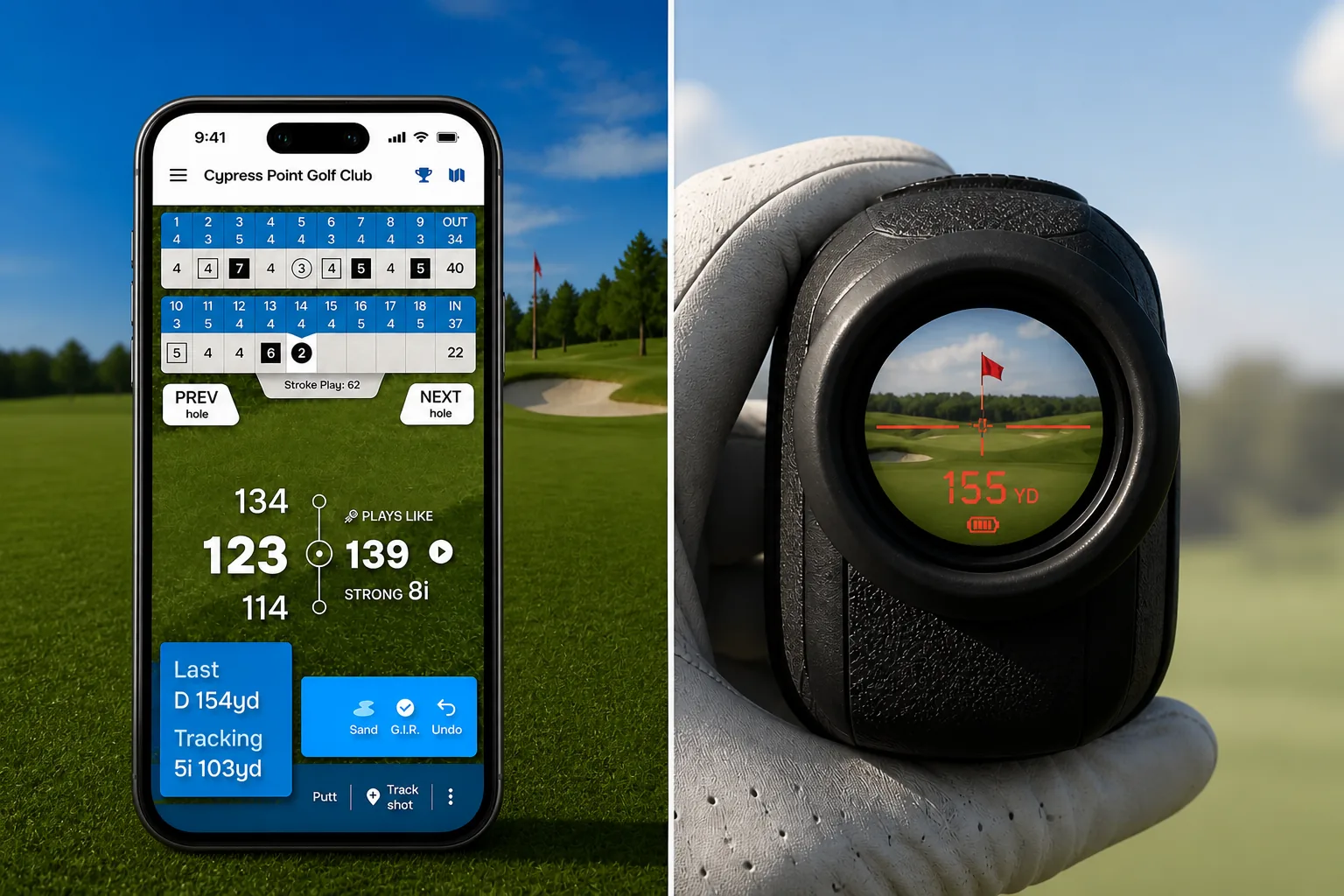
Golf Pad GPS vs. a traditional laser rangefinder. The Golf Pad app (left) displays front (134), middle (123), and back (114) yardages — the white 123 is the actual distance to the middle of the green, while the green 139 next to PLAYS LIKE is the elevation-adjusted distance the shot will actually play. The rangefinder (right) shows just one number: 155 yards to the flag, with no context for hazards, elevation, or layup targets.

There’s a quiet mistake happening on golf courses everywhere.

Amateur golfers are chasing perfection.

They laser a flag at 155 yards, lock onto that number, and convince themselves that’s the shot they need to hit. It feels precise. It feels professional. It feels like the right way to play.

It’s not.

As a former professional golfer and LPGA Tour coach, I’ve seen this pattern
over and over. And more often than not, that “perfect” number leads to big
mistakes, higher scores, and unnecessary frustration.

The truth is simple: perfect doesn’t exist in golf. And the tools you use shape the way you think.

THE PROBLEM WITH RANGEFINDERS

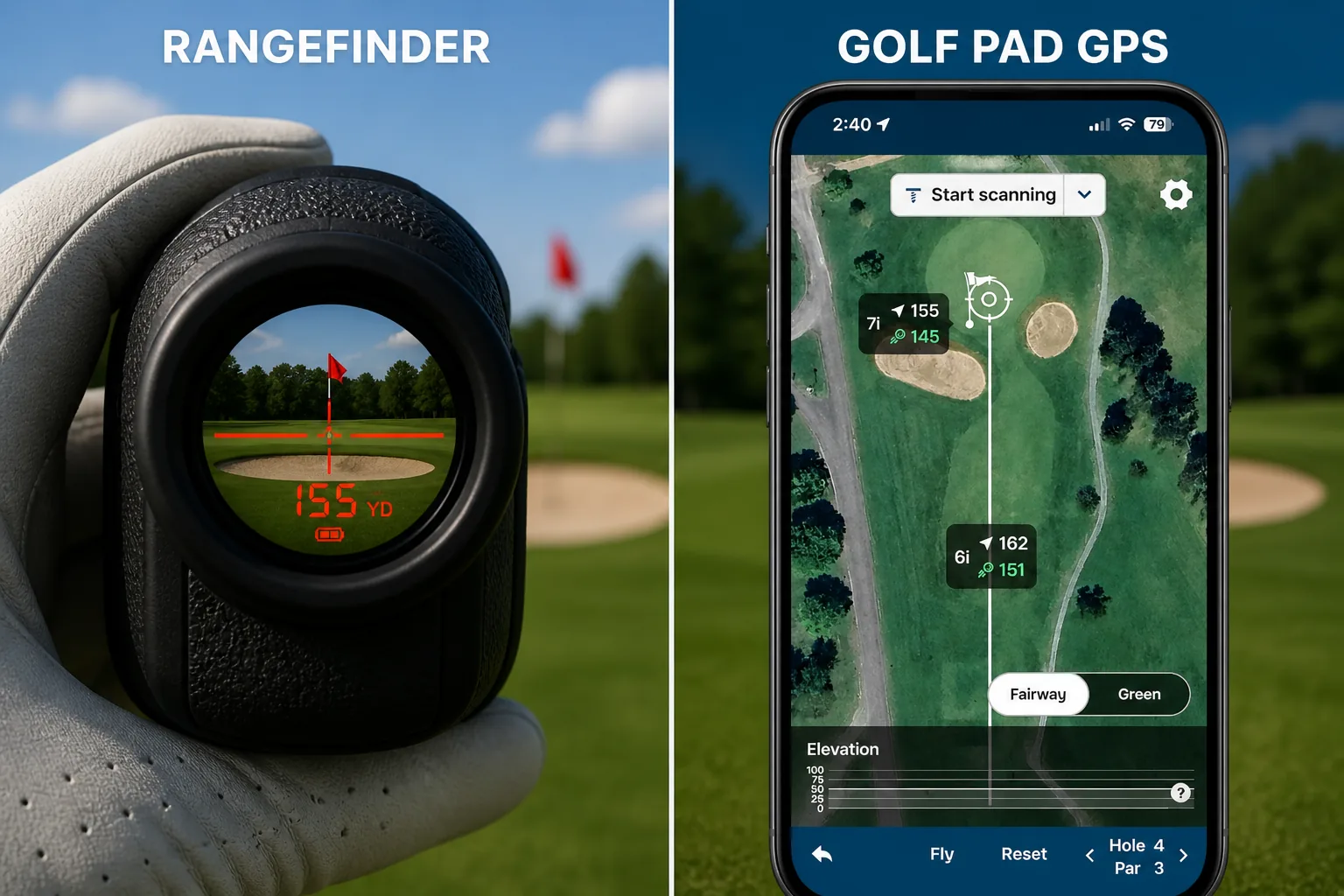
The same approach shot, two perspectives. The rangefinder (left) returns a single number — 155 yards to the pin. Golf Pad GPS (right) shows the full hole with multiple measured points. The white numbers (155 and 162) are actual yardages; the green numbers just below them (145 and 151) are the plays-like distances after elevation is factored in.

Rangefinders do one thing extremely well: they give you the exact distance to a specific point.

That’s also their biggest flaw.

They encourage you to:

  • Fixate on the flag
  • Chase a number instead of a result
  • Aim at the most dangerous part of the hole

A tucked pin at 155 yards is not your target. It’s a trap.

The questions you should be asking:

"What’s the carry over that bunker?" "What is it to the front edge of the green?" "What is the safest number to assure I carry that bunker and land safely on the green beyond the pin?"

If that pin is sitting behind a bunker, short-sided, or near a ridge, going straight at it requires a near-perfect strike. That’s a shot even elite players don’t attempt consistently.

But amateurs see 155, pull 155, and swing.

And when the strike isn’t perfect, they short-side themselves, find trouble, or turn a simple approach into a double bogey.


What GPS Apps Teach You (That Actually Lowers Scores)

GPS apps like Golf Pad GPS shift your mindset from precision to strategy.

Instead of one number, you get context:

  • Front, middle, and back of the green
  • Carry distances over hazards
  • Green depth and shape
  • Elevation and layout

This is how better golf is played.

You start asking smarter questions:

  • What’s the safe miss?
  • Where is the middle of the green?
  • What yardage gives me the highest margin for error?

That’s the difference between playing golf and managing a course and your ability.
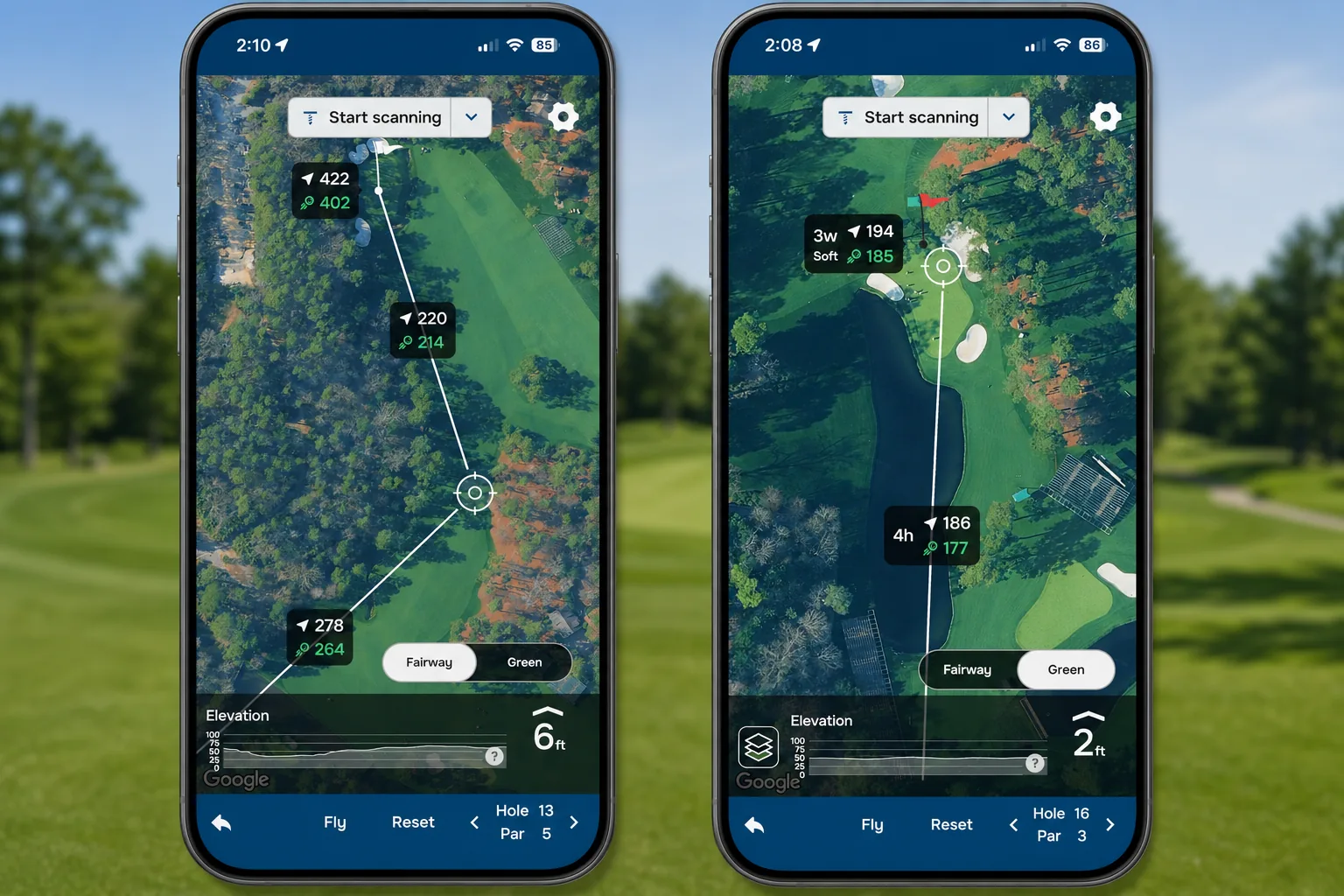
Golf Pad GPS lets you measure to any point on the course. On this Par 5 (left), distances to bunkers and the green are shown as actual yardages — 422, 220, 278 in white — with the plays-like values just below in green: 402, 214, 264. The elevation strip at the bottom indicates a 6-foot drop. On the Par 3 (right), club recommendations (3w, 4h) sit alongside actual distances (194, 186 in white) and plays-like distances (185, 177 in green), with a 2-foot elevation difference.

Why "Middle of the Green" Wins in Course Management

Let’s go back to that 155-yard tucked pin.

Here’s the reality:

  • Middle of the green might be 165
  • Front edge might be 150
  • Trouble is short and right

A GPS view instantly shows you this.

Now your decision changes:

  • Instead of trying to hit a perfect 155, you hit a controlled 160–165
  • Your dispersion now works for you, not against you
  • Your bad shots are still on the green

That’s how scores drop.

Not from perfect shots but from avoiding big mistakes.

Beyond the Flag

Standing on the tee with a blind tee shot, the rangefinder isn’t going to be of much help.

Cue Golf Pad GPS.

Just pull up the map and drag to measure anywhere on the course. Hazards, bunkers, dog-legs, and trees. Get your distance. Pick your target line. Commit.

That’s how you step onto a tee with confidence instead of guessing.

What I Did With My Players

When I coached elite juniors and LPGA-level players, I would often take rangefinders away.

Not permanently. But until they learned how to think.

They had to understand:

  • Carry numbers over bunkers
  • Where the safe yardage was
  • How far they could miss and still be okay
  • What their real distances were (not perfect ones)

Only once they developed that awareness did tools become helpful again.

Because tools don’t make decisions. Players do.

Rangefinders vs. GPS: The Real Difference

It’s not about technology. It’s about behavior.

Rangefinder mindset:

  • "How far is the flag?"
  • "Can I hit that exact number?"

GPS mindset:

  • "What’s the smartest place to hit this?"
  • "What gives me the best chance to score?"

One chases perfection. The other follows a game plan.

Play to Your Strengths, Not Your Ego

Most amateur golfers don’t lose strokes because they lack talent.

They lose strokes because they aim too precisely for their skill level.

Golf Pad GPS helps you widen your target, understand your margins, and play within your game.

And that’s where real improvement happens.

The whole-game difference. Golf Pad GPS provides full hole overview, front/middle/back distances, hazard and layup information, draggable measuring to any point, and shot tracking — all the inputs needed for smart course management. A rangefinder offers a single distance to the flag and nothing else: no hazards, no layups, no big-picture view.

Final Thought

If you want to get better at golf, stop trying to hit perfect shots.

Start trying to hit smart ones.

A rangefinder might give you a number.

A GPS app gives you a plan.

And over 18 holes, the plan wins every time

Play Smarter Golf

Get accurate GPS yardages, hazard distances, and smarter course management tools with Golf Pad GPS.

Download Golf Pad GPS →