
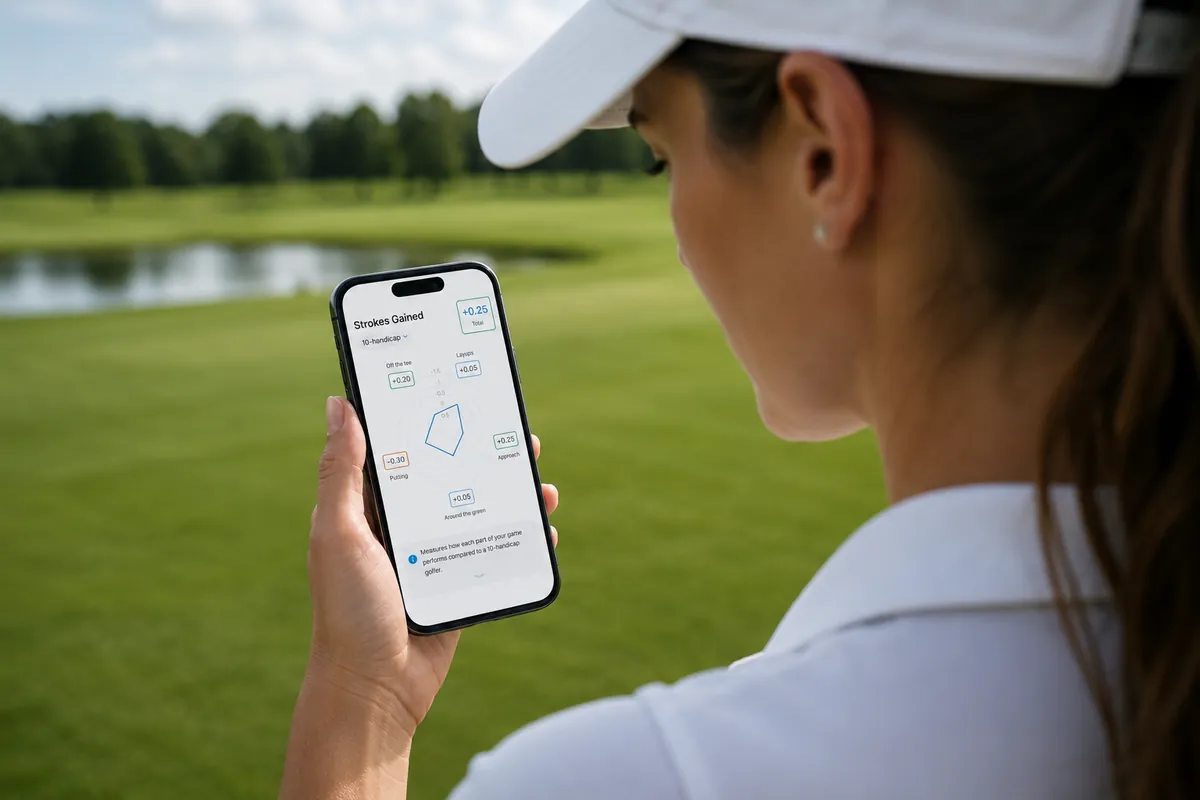
Get accurate GPS yardages, hazard distances, and smarter course management tools with Golf Pad GPS.
Download Golf Pad GPS →For years, golf statistics have been dominated by one idea: compare yourself to the PGA Tour.
The problem? Most golfers aren’t PGA Tour players.
When an average golfer sees that they’re losing strokes to Rory McIlroy or Scottie Scheffler, it doesn’t tell them much about how to improve. It simply highlights a gap that feels impossible to close.
That’s why Golf Pad took a different approach.
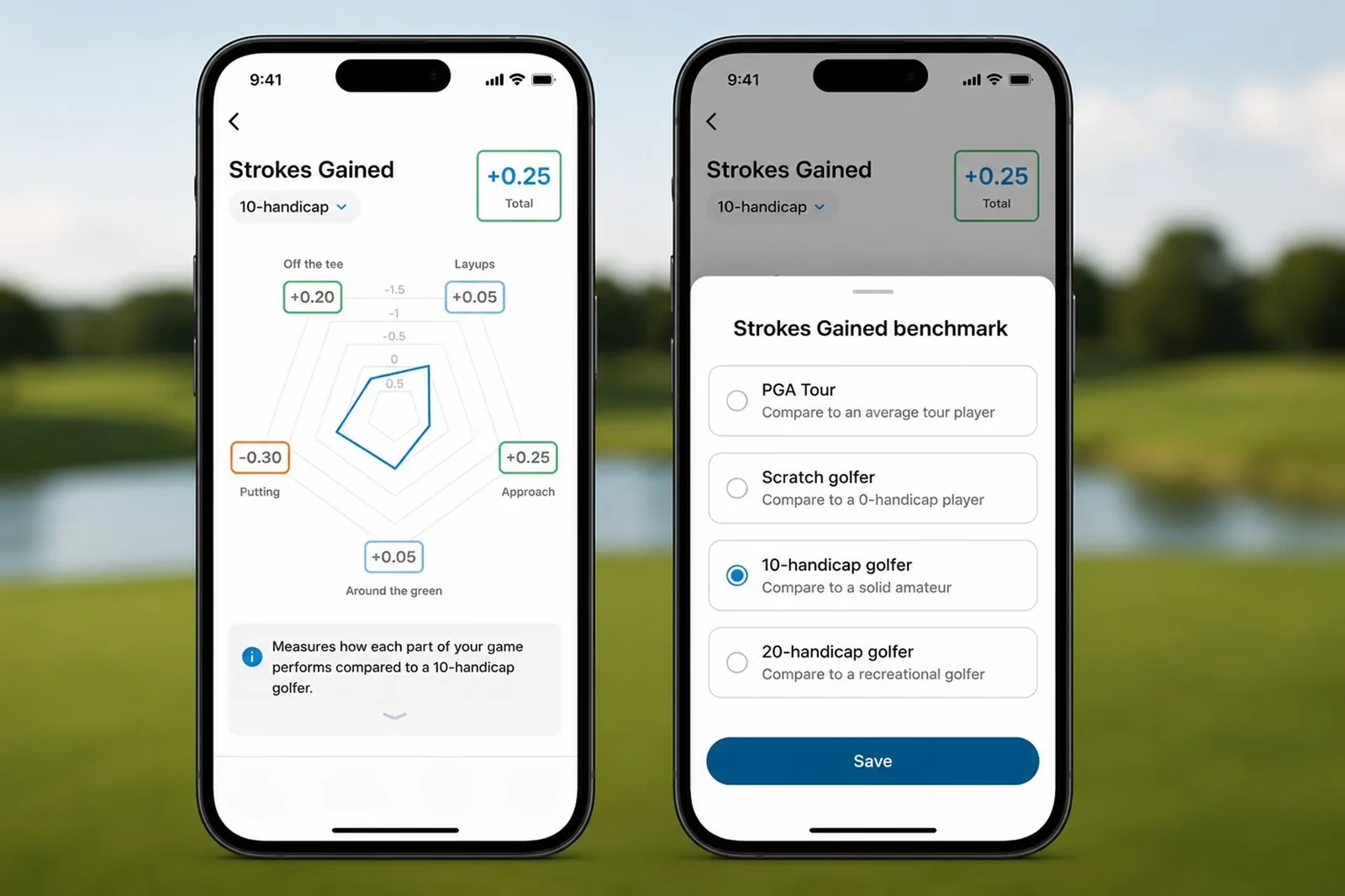
Golf Pad has long provided Strokes Gained analysis, but now golfers can compare their performance against multiple benchmark levels:
This simple change makes a huge difference.
A 15-handicap golfer doesn’t need to know how they compare to the best players on Earth. They need to know how they compare to the golfers they aspire to become.
Maybe your goal is to become a single-digit handicap. Maybe you’re trying to break 90 consistently. Maybe you’re simply trying to beat your friends more often.
With benchmark comparisons, Golf Pad shows exactly where those strokes are gained and lost.
Instead of wondering why you’re not a tour player, you can see why you’re not yet a 10 handicap.
That’s actionable.
Most golfers spend practice time on the wrong things.
They hit whatever club feels good that day. They spend an hour pounding drivers because it’s fun. They hit putts because putting greens are convenient.
But improvement comes from understanding where strokes are actually being lost.
Golf Pad’s statistics make that incredibly clear.
If your benchmark comparison shows you’re losing most of your strokes around the green, that’s where your attention belongs.
If you’re already outperforming your handicap benchmark with the driver but losing strokes with approach shots, there’s your answer.
The data removes the guesswork.
Most golfers know whether they hit their driver “well” or “poorly.”
Very few actually know the numbers.
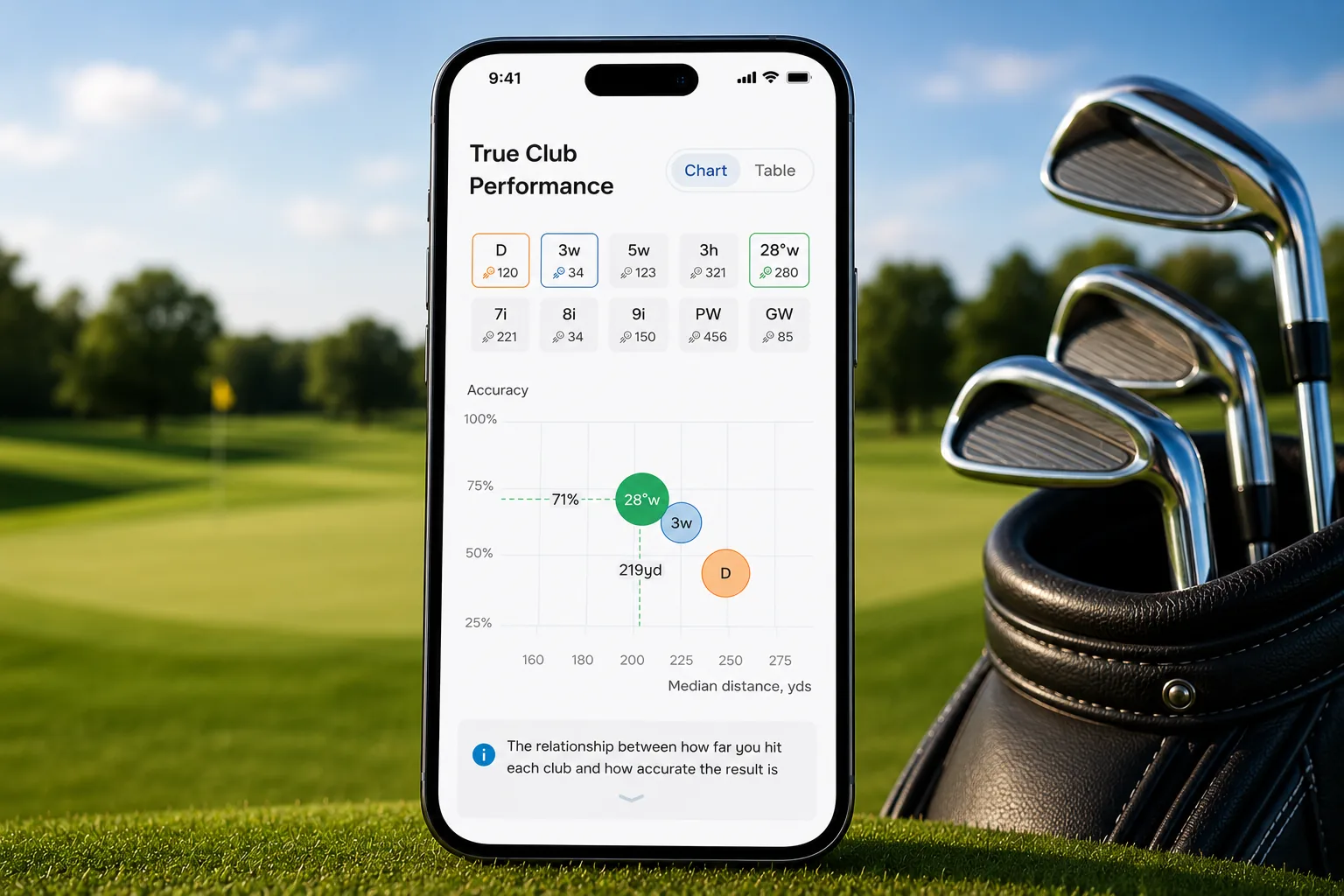
Golf Pad tracks tee shot performance by club, helping golfers understand which clubs are truly helping them score.
You may discover that your 3-wood produces better scoring outcomes than your driver.
You may learn that your hybrid is your most reliable club on narrow holes.
You may even find that the club you trust most isn’t performing nearly as well as you thought.
The numbers don’t have opinions. They simply show what is happening on the course.
Every golfer has a “range distance.”
And then there’s the distance they actually hit the ball on the course.
Those numbers are often very different.
Golf Pad tracks average distances and shot patterns for every club in the bag, helping golfers understand their true performance.
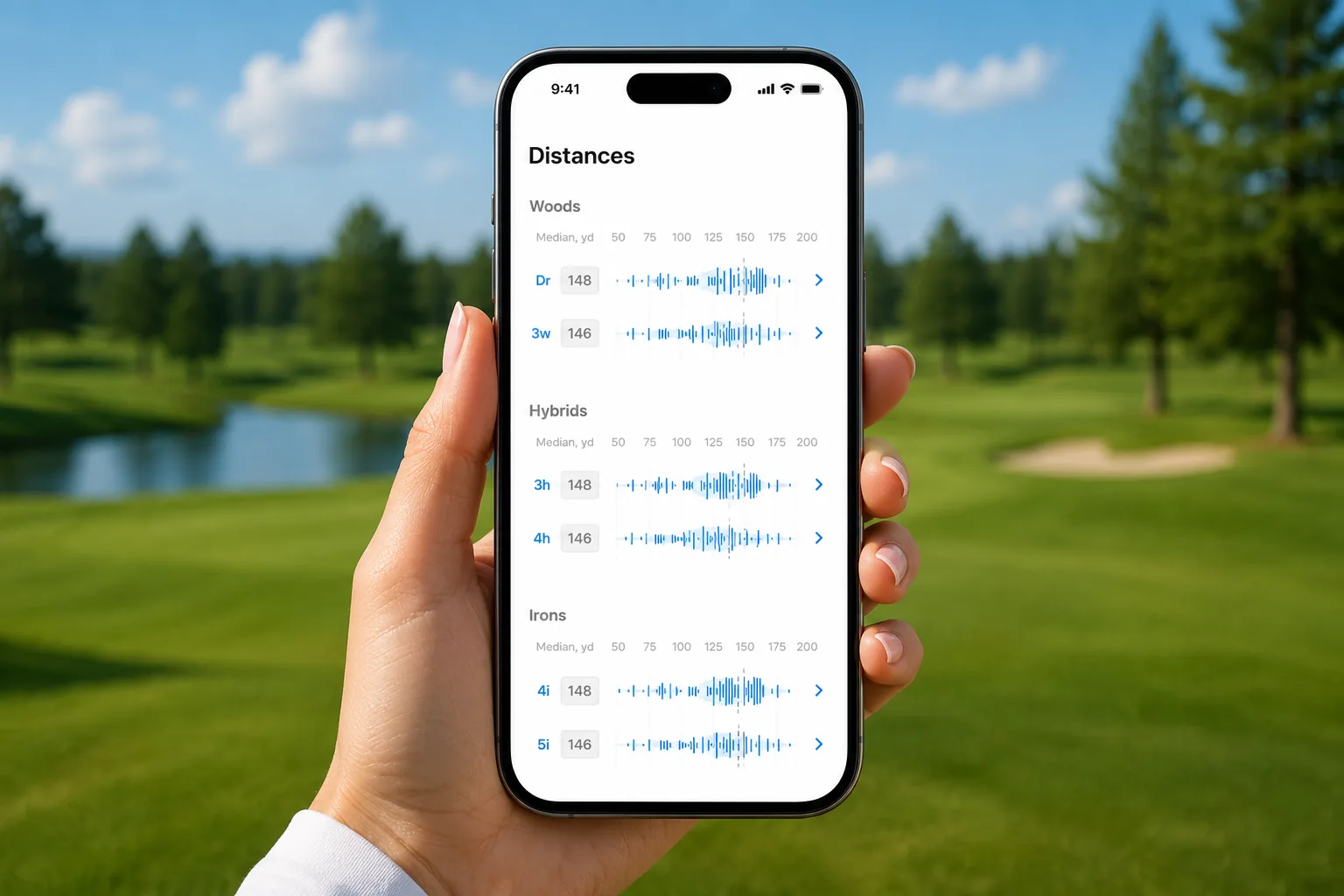
Instead of saying, “I hit my 7-iron 165 yards,” golfers can see:
Knowing your real distances leads to better club selection, smarter decisions, and lower scores.
One of the most valuable insights Golf Pad provides is understanding approach shot performance.
How often do you hit the green from 100 yards?
What about 150 yards?
175 yards?
Which clubs produce the best results?
Most golfers assume they know the answers. The data often tells a different story.
By analyzing greens hit by distance and by club, Golf Pad highlights exactly where approach play is strong and where improvement is needed.
This makes practice sessions dramatically more effective because golfers can focus on the shots that matter most.
The ultimate goal of statistics isn’t collecting numbers.
It’s getting better.
Golf Pad’s entire philosophy has always been built around helping golfers improve through real, usable information.
That’s why every stat is designed to answer a simple question:
“What should I work on next?”
The answer might be driving accuracy.
It might be wedge play.
It might be improving performance from 125-150 yards.
Whatever the answer is, Golf Pad helps golfers find it quickly and confidently.
While many golf apps continue adding social features, entertainment elements, and distractions, Golf Pad remains focused on what matters most: helping golfers play better golf.
From benchmark-based Strokes Gained analysis to club performance tracking, distance analytics, shot dispersions, and detailed approach statistics, every feature is designed with one goal in mind.
Real improvement.
Because the best golf statistics aren’t the most complicated.
They’re the ones that clearly show golfers where they stand today, where they want to go tomorrow, and exactly how to get there.


Subscribe for early access to promotions, feature announcements & more.

