

Par
70
Yardage
7,220
Open here
11th
New 18th
508 yd
The 154th Open Championship comes to Royal Birkdale Golf Club in Southport, England, from July 16 to 19, 2026. It’s the 11th time golf’s oldest major has visited Birkdale, more than any venue except St Andrews, and the famous links arrives reworked: redesigned holes, new greens, and a straightened finishing hole now measuring 508 yards. Playing to a par of 70 at roughly 7,220 yards, Birkdale will reward precise driving and punish anything loose. Here’s how the course plays, what’s changed since Jordan Spieth won here in 2017, and our top five projections to lift the Claret Jug.
Birkdale is often called the fairest test in the Open rotation. Unlike links courses where fairways heave and bounce shots sideways, Birkdale’s fairways run through flat valleys between towering dunes. Good shots tend to get what they deserve, which is why its list of champions reads like a hall of fame: Peter Thomson, Arnold Palmer, Lee Trevino, Johnny Miller, Tom Watson, Mark O’Meara, Padraig Harrington, and Spieth.
The dunes do more than frame television shots. They funnel the wind in swirling, unpredictable ways, and with the course sitting hard against the Irish Sea, the weather can turn a gentle 7,220 yards into the longest walk in golf. History lives here too: a plaque on the 16th commemorates Arnold Palmer’s escape from the buckthorn in 1961, Harrington’s 5-wood into the 17th sealed the 2008 Open, and Branden Grace’s 62 in 2017 remains the lowest round in men’s major history.

Birkdale starts with one of its hardest holes. The 447-yard 1st bends with out of bounds all down the right and a bunker on a mound to the left, and the prevailing left-to-right wind pushes tee shots toward the trouble. Expect many players to lay back short of the left bunker and accept a longer approach. Holes 2 and 3 continue the theme: position off the tee beats power, because approaches from Birkdale’s thick rough feed into run-off areas.
The 4th, a 219-yard par 3 from an elevated tee, is about 25 yards longer than in 2017, with a 40-yard-deep green that makes club selection a guess in wind. The completely redesigned 5th is the shot-maker’s hole: a 321-yard par 4 where the green is now visible and drivable, but long is dead. The smart play is a 200-yard layup and a wedge. The 514-yard 6th was the hardest hole in 2017 and should be again, demanding a laid-up drive into the corner of the dogleg and a long second into the wind. The 151-yard 7th is the shortest hole on the course and one of the scariest, with a new raised green, the deepest bunkers on the property, and the iconic donut bunker still guarding the left.
The 8th plays downwind and favors the left side for the best angle, though a new bunker on the right punishes bold lines. The 9th offers a genuine risk-reward decision on the dogleg. Holes 10 through 13 demand placement: the 10th runs out of fairway for greedy drivers, the 11th green hides a ridge that separates makeable putts from three-putt territory, the 12th is a delicate 186-yard par 3 with severe new run-offs, and the 502-yard 13th plays as a slight dogleg to a green ringed by dunes.
The redesigned 602-yard 14th brings bunkers on both sides and a small, wildly undulating green. The brand-new 15th is the longest par 3 on the course at 241 yards, typically downwind to a green that slopes away from the player; stopping the ball there in a breeze may be the week’s hardest single shot. The short 16th tempts late chargers but punishes anything left. The 566-yard 17th, framed by two huge dunes, is the last real birdie chance, and its two-tier green will decide someone’s Sunday. Then comes the reworked 18th: the tee has moved well left, turning the old dogleg into a 508-yard straightaway lined with fairway bunkers. Expect layups off the tee and long, nervy approaches to close out the Championship.
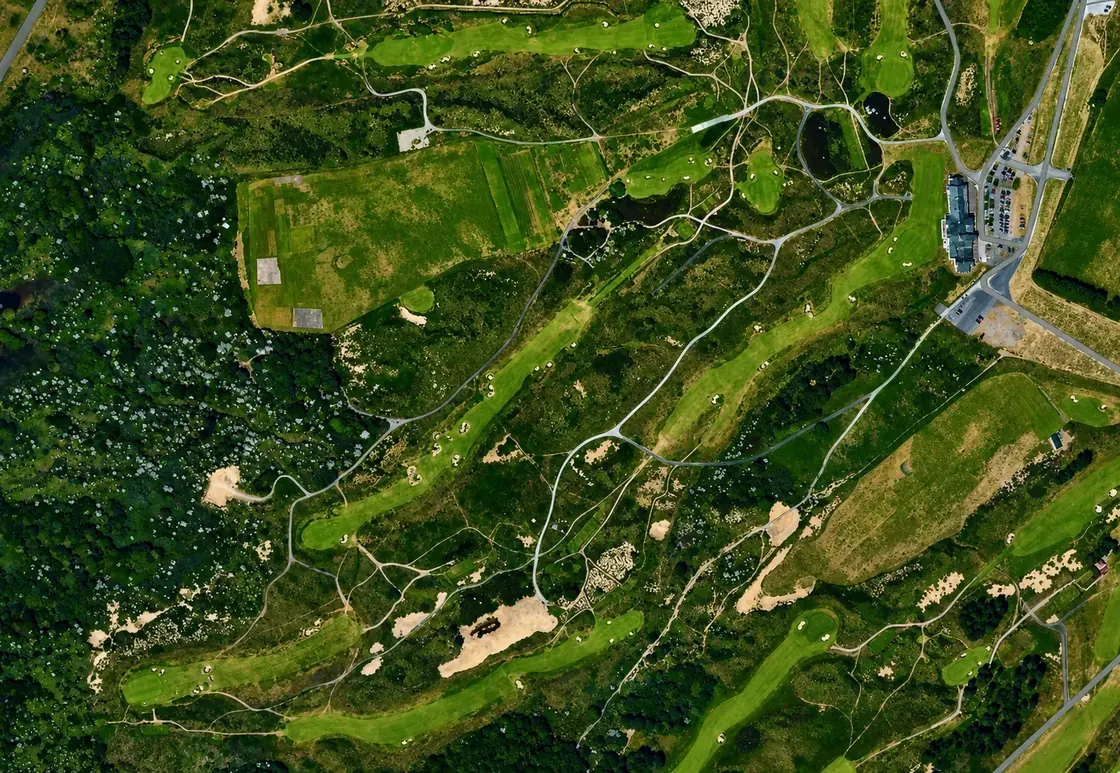
| 5th | Completely redesigned as a drivable risk-reward par 4. |
| 7th | New raised green. |
| 14th | The par 5 was reworked. |
| 15th | A new long par 3 built on the old 14th’s location — 241 yards, the longest par 3 on the course. |
| 18th | Tee moved left to create a straight 508-yard finishing hole lined with bunkers. |

Top 5 Projections to Win the 2026 Open
Odds below are from DraftKings as reported at the start of Open week and will move before Thursday. Treat them as a snapshot, not investment advice.
The world No. 1 and defending Champion Golfer of the Year. His missed cut at the Scottish Open was his first in years and feels more like rust management than decline. Birkdale’s premium on precise iron play and flat-out fairness fits the best ball-striker on earth.
Sharp at the Scottish Open with a T7 that included late contention. His high ball flight cuts through wind better than it used to, and no player in the field drives it into position on links land better when he’s committed to the layup game Birkdale demands.
The hometown story. Fleetwood grew up in Southport playing these dunes, finished runner-up at the 2019 Open, and arrives having finally shaken the closer label. Nobody in the field will read Birkdale’s winds better, and the galleries will be entirely his.
A proven wind player with Irish Open pedigree on links courses and the patience Birkdale rewards. His scrambling around firm run-offs is elite, and he’s been quietly consistent in majors for two seasons.
The 2024 Champion Golfer at Troon has finished inside the top 20 at every Open since 2018. Flat-lined temperament, precise flighting, and a game with no exploitable weakness on a course that exposes them all.
Best of the rest: Matt Fitzpatrick (+2150) brings English links craft and a resurgent putter, and Ludvig Aberg (+3200) has the tee-to-green profile of a player who wins one of these soon.
The R&A confirms the 2026 purse during tournament week. For reference, here is how the 2025 Open’s $17 million was shared out at Royal Portrush — a good guide to what each finishing position at Birkdale is likely to be worth.
2025 Open payout · Royal Portrush
Total purse $17,000,000Winner’s share $3,100,000Field of 156
2025 Open Championship payout at Royal Portrush; total purse $17,000,000 (USD). Shown as a 2026 guide — the R&A confirms the 2026 purse during tournament week. Positions 26–30 ran from $131,800 down to $111,200.
The strategy the pros will use at Birkdale works at your course too: pick the club that finds the fairway rather than the longest one, favor the side of the green that leaves an uphill putt, and know your real carry distances before you challenge a bunker. A free GPS app like Golf Pad makes that easier, with satellite maps and flyovers of courses worldwide, distances to any point on the hole, and plays-like distances that account for wind and elevation, the same math a links caddie does in his head. You can even preview a course from your couch, Open-style, before you ever tee it up.
A Golf Pad flyover of a links-style hole with distances displayed.
The 154th Open Championship will be played July 16 to 19, 2026, at Royal Birkdale Golf Club in Southport, England, with practice days from July 12 to 15. It is the 11th time Royal Birkdale has hosted The Open, the most of any venue except St Andrews.
Scottie Scheffler, the defending champion and world No. 1, opened Open week as the favorite at +600, followed by Rory McIlroy at +780 and Jon Rahm at +1550. Southport native Tommy Fleetwood and 2024 champion Xander Schauffele are popular picks around +2150 to +2200.
Royal Birkdale plays as a par 70 of roughly 7,220 yards for the 2026 Open, with two par 5s (the 14th and 17th) and four par 3s, including the new 241-yard 15th, the longest par 3 on the course.
The 5th was completely redesigned as a drivable risk-reward par 4, the 7th has a new raised green, the 14th par 5 was reworked, a new long par-3 15th was built on the old 14th’s location, and the 18th tee moved left to create a straight 508-yard finishing hole lined with bunkers.
The 514-yard par-4 6th was the hardest hole at the 2017 Open and is expected to be again, requiring a precise layup drive around a dogleg and a long approach into the prevailing wind to an elevated green. The 447-yard 1st is among the toughest openers in golf.
Jordan Spieth won the 146th Open at Royal Birkdale in 2017, holding off Matt Kuchar with a famous back-nine rally on Sunday. That week also saw Branden Grace shoot 62, the lowest single round in men’s major championship history.
Yes. Royal Birkdale is a private members’ club that welcomes visiting golfers on selected days, typically booked well in advance through the club. Green fees are at the premium end, and a handicap certificate is generally required, so check the club’s official site for current visitor policies.


Subscribe for early access to promotions, feature announcements & more.

