

Almost every charity golf tournament runs on a scramble format, where each player on a team hits a shot and the group plays their best ball each time, repeating until the hole is finished. It's the standard for a reason: a scramble keeps a foursome moving at a similar pace regardless of skill level, it's forgiving for golfers who don't play often (a common mix at a charity event, where plenty of attendees are there to support the cause more than to compete), and it produces a single team score that's easy to explain on a leaderboard.
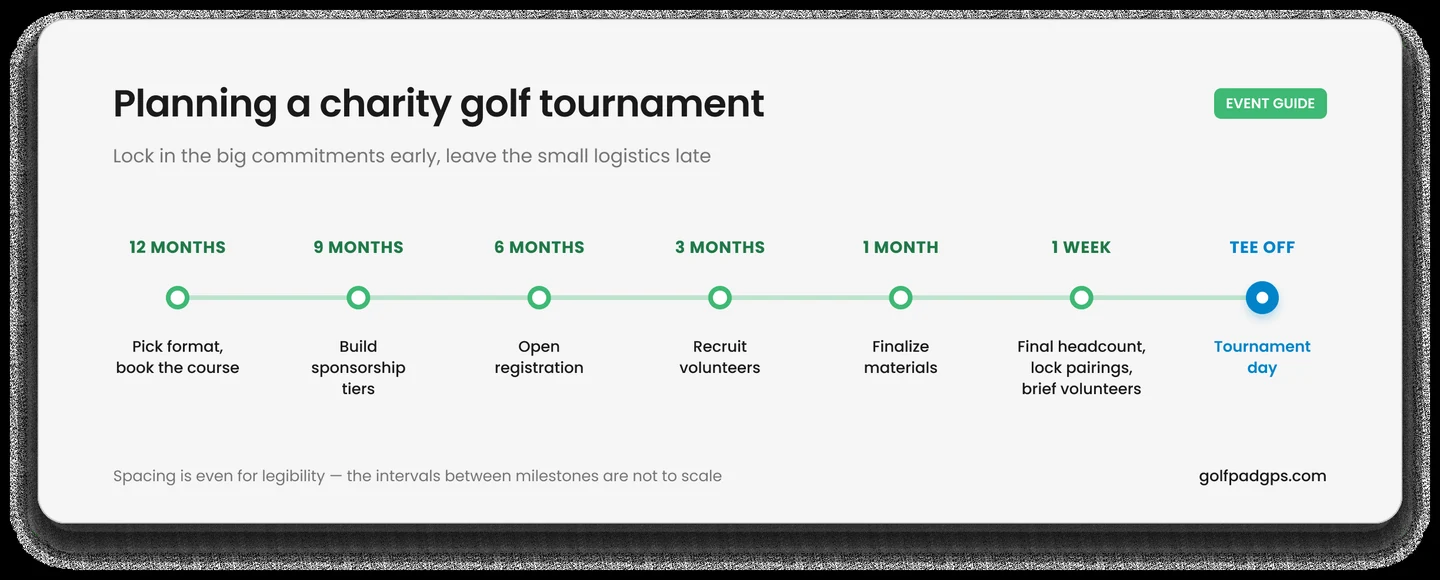
Once the format is set, book the course as early as possible, ideally about 12 months out. Popular courses fill their best Saturday dates well over a year in advance, and locking in the date before announcing anything publicly protects you from planning around a course that turns out to be unavailable.
A charity golf tournament is easiest to run when the big commitments happen early and the small logistics happen late:
Entry fees rarely cover a charity tournament's full fundraising goal on their own. Tiered sponsorship packages, priced so a range of local businesses can participate, typically make up the bulk of the total. A common tier structure looks something like this, though exact pricing varies by market and event size:
| Tier | Typical price | Typical benefits |
|---|---|---|
| Title Sponsor | $5,000 to $25,000+ | Name integrated into the event name, top logo placement everywhere, a speaking opportunity, 1 to 2 foursomes included |
| Gold Sponsor | $2,000 to $5,000 | Prominent logo placement on banners and materials, one team entry, on-course signage |
| Silver Sponsor | $1,000 to $2,000 | Logo on website and materials, hole or tee box signage, two player registrations |
| Bronze Sponsor | $500 to $1,000 | Recognition in the event program, website listing, one player registration |
| Hole Sponsor | $100 to $300 | Branded signage at a specific hole, optional promotional table |
Beyond sponsorships, mulligans (extra shots sold before the round), hole-in-one and longest-drive contests, and a silent or live auction are the most common ways to add revenue without raising the entry fee itself.
Add up total expected expenses, venue, catering, prizes, staff, and marketing, then divide by the number of players you expect, to get a real cost-per-head figure. That number should inform your entry fee, and it's worth keeping the total prize value higher than the entry fee so playing still feels worthwhile even for golfers who don't win anything specific.
The most common budgeting mistakes are treating the event as a one-off instead of something to build on year over year, under-pricing sponsorship tiers so there's no room for larger sponsors to give more, and not comparing final costs against revenue afterward to find what to improve next time.
A charity outing has more moving logistics than a normal round: registration check-in, pairings and shotgun-start logistics, on-course contests (closest-to-the-pin, longest drive), scoring collection, and an awards or dinner portion afterward. Assigning specific volunteer roles ahead of time, registration table, cart staging, contest holes, scoring, rather than a general pool of helpers, is what keeps the actual event day calm.
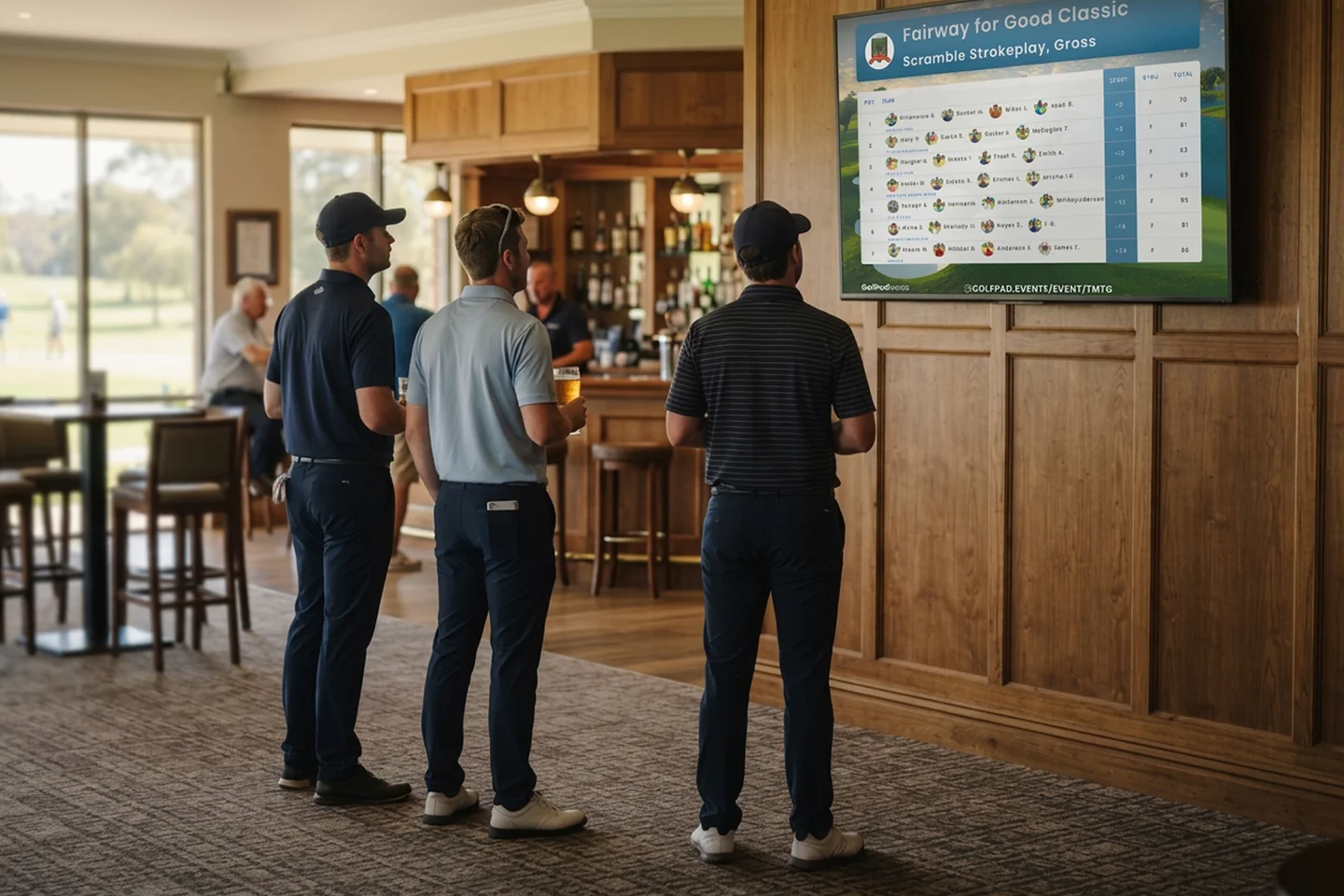
This is also where the right technology removes a lot of manual work. Golf Pad Events, which is free, handles online registration, automatic or drag-and-drop pairings, and side games like closest-to-the-pin and skins alongside the main scramble scoring, and it syncs with the free Golf Pad GPS app so players score their own round from their phone instead of turning in paper cards. Scores update a live leaderboard on players' phones and on a TV display if you set one up, which means no one has to manually key in scorecards after the round to get final results, useful when the awards portion is happening the same afternoon and results need to be accurate immediately. For a charity event specifically, keeping the tech costs at zero also means more of what you raise goes to the cause rather than to running the tournament.
Fundraising doesn't end when the last group finishes. Thank sponsors and volunteers promptly and specifically, publish final results and a rough sense of funds raised while the event is still fresh, and start a simple debrief: what worked, what didn't, and what you'd change. That debrief is what turns a one-time event into an annual one, and it's much easier to write down honestly in the week after the event than to try to reconstruct a year later.
What's the best golf format for a charity tournament?
A scramble, where each team plays their best shot each time, is the standard choice because it keeps mixed-skill groups moving at a similar pace and produces one simple team score.
How far in advance should you book the course for a charity golf tournament?
About 12 months out. Popular courses can book their best dates more than a year ahead, so securing the date before any public announcement protects the rest of the timeline.
How much should hole sponsorships cost?
Hole sponsorships typically run $100 to $300, while higher tiers like Gold or Title sponsorships can range from a few thousand dollars up to $25,000 or more depending on the event's size and market.
Do entry fees usually cover the full cost of a charity golf tournament?
Rarely on their own. Most of a tournament's fundraising total comes from tiered sponsorships plus add-ons like mulligans, contests, and auctions, not entry fees alone.
What technology do you need to run a charity golf tournament?
At minimum, a way to handle registration, pairings, and scoring. Golf Pad Events covers all three for free, including live leaderboards through the Golf Pad GPS app, so player scores update automatically instead of requiring manual entry after the round.
How many volunteers does a charity golf tournament need?
It depends on the field size, but assign specific roles, registration, cart staging, contest holes, and scoring collection, rather than a general volunteer pool, so responsibilities are clear on the day of the event.


Subscribe for early access to promotions, feature announcements & more.

